

Research
AREAS AND LINES OF RESEARCH
WHAT WE DO. Researchers at IMEYMAT undertake the synthesis, characterisation and study of the properties and behaviour of materials, and propose applications for them, based on experimental measurements combined with simulation techniques.
MULTISCALE APPROACH. Our work encompasses the analysis of structure and properties from the nano- and micro- to the macro-scale, in order to analyse and fully understand the relationships between structure, composition, physical and chemical properties, and the engineering functions that materials can perform. To this end, we have researchers with complementary training profiles and the ability to integrate results from different experimental techniques.
IMPACT. Research and development projects focus on metals, ceramics, polymers and composite materials, with applications across various sectors: Transport (Aerospace and Maritime), Defence, Construction, Energy, Environment, Electronics, Communications, Healthcare, Bioeconomy, and Technologies of Advanced Manufacturing.
FINANCING. IMEYMAT’s activity is structured around PROJECTS obtained through competitive public calls for proposals, or through CONTRACTS, which is the usual formula for conducting I+D+i studies with COMPANIES or for providing them with the specific services they require.
The institute is organised around three areas of research:
IMEYMAT researchers are users and managers of the Singular Scientific and Technical Facility for Electron Microscopy (ICTS-ELECMI), and are scientifically responsible for other advanced facilities at the UCA that enable complex problems in material characterisation to be addressed and solved, both at the structural and compositional levels, with resolutions ranging from the nano- to the micro-scale. These studies are complemented by macro data obtained using other conventional techniques, in order to relate multi-scale structural and analytical information to the physical, chemical and engineering properties of materials.
The Institute has researchers with solid knowledge of the fundamentals of the techniques and extensive experience in their application, who have developed their own methodologies for studying samples in situ and under conditions similar to those in which the materials operate in service, as well as for producing tomograms that integrate 2D results, converting them into three-dimensional images. All of this provides a competitive advantage over other centres, thanks to TEM, SEM, AFM, FIB, XPS, cathodoluminescence, ellipsometry, FTIR, and RAMAN techniques.
The Institute undertakes interdisciplinary research projects, ranging from the scientific fundamentals of nanoscience to the development of applications in various sectors of activity covering basic science, the development of new nanomaterials, and their use in various applications:
ENERGY AND THE ENVIRONMENT
- Rational design, development and characterisation of catalysts. Ultradispersion of noble metals and catalysis by isolated atoms. Catalysts for the production of sustainable fuels and environmental remediation. Photocatalysis and electrocatalysis for the production of green hydrogen and other clean fuels. Catalytic valorisation of biomass and CO2. Activation of catalysts through innovative approaches. Optimisation of catalytic reactions for energy and natural resource savings. Advanced design of metal-based and ceramic-based monolithic reactors.
- Nanofluids and phase change materials for solar thermal energy applications. Innovative, competitive and environmentally friendly. Materials with advanced thermal properties. New generation semiconductor materials for more efficient and sustainable photovoltaic devices.
- Controlled incorporation of dopants into TIO2 nanoparticles to improve and extend their photoefficiency range.
- Aerogels for thermal and acoustic insulation.
- Development of stainless steel containers for high-pressure hydrogen storage.
- Use of green hydrogen as a clean fuel for the heat treatment of steels. Corrosion behaviour of the steels produced.
ELECTRONICS AND COMMUNICATIONS
- Post-silicon electronics. Green electronics with new diamond chips for energy converters. JFET and MOSFET devices for power electronics. Optoactivated channels for new-generation single-photon electronic devices. Materials for quantum communication and computing.
- Additive manufacturing of quantum dots in the visible and IR for photonics and nanoelectronics.
- Studies of electronic devices using cathodoluminescence and ion beams (FIB).
- Development of new radiation-resistant multispectral sensors for satellite applications.
- Nanostructural and nanoanalytical characterisation of complex structures developed on III-V semiconductor substrates. Simulation of nanostructures and nanodevices. Quantum semiconductors with antimony.
- Diamond-based piezoelectric sensors for vibration measurement and utilisation of vibrational energy.
- Optical characterisation of thin films.
HEALTH AND BIOECONOMY
- Nanomaterials applied to the design and development of multiparametric biosensors for the continuous analysis of biomedical samples. Green synthesis of nanomaterials for biosensors.
- Biocompatible hybrid aerogels as supports for cell tissue growth.
- Laser texturing of stainless steels for antimicrobial applications in healthcare and food industry environments.
- Design and manufacture of innovative medical instruments using additive manufacturing.
- Development of 3D bioprinting techniques applied to medical implants, using modified and functionalised biopolymers.
- Luminescent nanofluids for use as nanothermometers in living organisms.
- Biosensors with applications in agriculture and the environment.
- Recycling of agricultural waste and debris using additive manufacturing techniques.
CONSTRUCTION
- Design and development of smart materials by controlling their nanostructure and surface properties, for use in construction and in treatments for the conservation and restoration of monumental heritage. Consolidating additives.
- Materials with smart wetting properties for concrete protection: industrial-scale demonstration.
- Smart surfaces with repellent, self-cleaning, decontaminating and self-sterilising properties.
- Thermochromic, anti-reflective and self-cleaning coatings for passive smart windows.
- Innovative mortars with phase change materials added.
IMEYMAT has the technological capabilities to improve the efficiency, quality and flexibility of production processes for parts of different types and geometries, including large formats, as well as to study the behaviour of materials in service. The main sectors of application are Transport (Aerospace and Naval) and Defence, extending to other industrial sectors.
All of this is being applied to the development of research projects on the following topics:
- Sustainability, circularity and eco-design in manufacturing processes.
- Development of sustainable computer tools for 3D printing.
- Sustainable processing of metallic materials through additive manufacturing and artificial intelligence.
- Aerostructures with advanced surface properties for low-emission aircraft.
- Metal additive manufacturing with special steels and alloys, including large formats and finishing treatments by machining or electropolishing.
- Optimisation of high-thickness hybrid laser-arc welding, through the Advanced Laser Welding Centre (CASOL).
- New generations of anti-corrosive treatments for the protection of metals and alloys.
- Wear of materials and tools: tribological studies on metallic or ceramic materials.
- Drilling process optimisation: intelligent drilling in advanced aeronautics.
- Application of artificial vision techniques to process development and optimisation.
- Optimisation of AWJM cutting processes for thick carbon fibre components.
- Sustainable packaging materials for aerostructures.
- Large-format 3D printing of polymer matrices: Material selection and optimisation, prototyping, and circularity.
- Design and manufacture of composite materials for prototypes of aerostructures and vessels.
- Standardisation of recycled plastics for use in additive manufacturing. A second life for ocean plastic waste by converting it into sustainable resins for 3D printing.
- Development of polymer matrix composite materials through additive manufacturing as a second life for agricultural and industrial waste.
RESEARCH GROUPS
IMEYMAT includes among its members 12 heads of scientific teams, recognised as research groups by the University of Cadiz and the Regional Government of Andalusia.
These teams, composed of chemists, physicists and engineers, are joined by researchers from other fields of knowledge, reinforcing opportunities for interdisciplinary collaboration.
|
SCIENTIFIC TEAMS |
NAME |
RESPONSIBLE PARTIES |
| FQM110 | SOLID STATE CHEMISTRY AND CATALYSIS | CAUQUI LÓPEZ, Miguel Ángel |
| FQM166 | SIMULATION, CHARACTERISATION AND EVOLUTION OF MATERIALSNAVAS PINEDA, Francisco Javier | |
| FQM249 | INSTRUMENTATION AND ENVIRONMENTAL SCIENCES | PALACIOS SANTANDER, José María |
| FQM334 | STRUCTURE AND CHEMISTRY OF NANOMATERIALS | CALVINO GÁMEZ, José Juan |
| FQM335 | APPLIED MAGNETISM AND OPTICS | BLANCO OLLERO, Eduardo |
| FQM419 | NANOMATERIALS FOR ENERGY AND ENVIRONMENTAL SUSTAINABILITY | DELGADO JAÉN, Juan José |
| TEP027 | MATERIALS AND MANUFACTURING ENGINEERING AND TECHNOLOGIES | SALGUERO GÓMEZ, Jorge |
| TEP115 | PROCESSING OF NEW MATERIALS VIA SOL-GEL | PIÑERO DE LOS RIOS, Manuel |
| TEP120 | MATERIALS SCIENCE AND ENGINEERING | VILLAR CASTRO, Pilar |
| TEP231 | CORROSION AND PROTECTION | BOTANA PEDEMONTE, F. Javier |
| TEP243 | NANOMATERIALS | MOSQUERA DÍAZ, María Jesús |
| TEP946 | MATERIALS AND NANOTECHNOLOGIES FOR INNOVATION | MOLINA RUBIO, Sergio Ignacio |
PROJECTS I+D+i
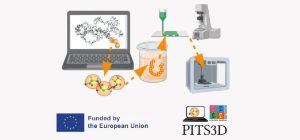 |
The University of Cádiz, through the PITS3D project (Polymer Informatics Tools for Sustainable 3D Printing), has developed a series of open-access software tools designed for the design of sustainable polymers suitable for use in advanced 3D printing. Petra Bacova. ACCESS |
Learn about IMEYMAT’s I+D+i projects
PUBLICATIONS
Featured
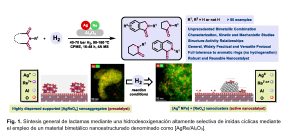
DOCTORAL THESES
IMEYMAT researchers have trained more than 140 doctors, with theses in the fields of Chemistry, Physics, Materials Science and Technology, and Manufacturing Process Engineering.
Featured
By irradiating stainless steel surfaces with lasers under controlled conditions, drawing inspiration from effects found in nature, it is possible to generate nanoscale textures that hinder the adhesion of bacteria. The results can be applied to improve the control of microbial contamination in the food industry and in healthcare settings.
She has developed luminescent nanofluids for biomedical applications. Perovskite quantum dots and doped nanodiamonds were synthesised with emissions optimised within the biological windows, ranges of light that penetrate tissue more effectively. A key finding was the emission within one of these windows (650–950 nm), opening up the possibility of using these materials as nanothermometers—devices capable of measuring temperature inside living organisms at the nanoscale.
The aim was to develop electrodes as an alternative to platinum in order to reduce hydrogen production costs. To this end, they have synthesised gold particles with surfaces modified by molybdenum sulphides. By controlling the dispersion of the gold, the thickness of the sulphide layers, and defects in their structure, promising catalytic results have been achieved, associated with very thin sulphide layers that incompletely cover the nanometre-sized gold cores.
The thesis, carried out in collaboration with researchers from INBICA, has developed new biomaterials using the sol-gel method combined in an innovative way with additive manufacturing techniques and laser ablation. It has been demonstrated that the combination of silica with biopolymers such as chitosan and gelatin allows for the production of materials with improved physicochemical, structural and biological properties for bone tissue regeneration processes.